.svg)
%204.svg)
Over 3,500 sinks installed
Contact Us
Thank you! Your submission has been received!
Oops! Something went wrong while submitting the form.
A bad smell coming from your kitchen sink is one of those problems that makes the whole kitchen feel unclean — no matter how recently you've scrubbed it. The good news: most sink odors have a specific cause that can be fixed. Here's how to diagnose what's happening and what actually works to get rid of it.
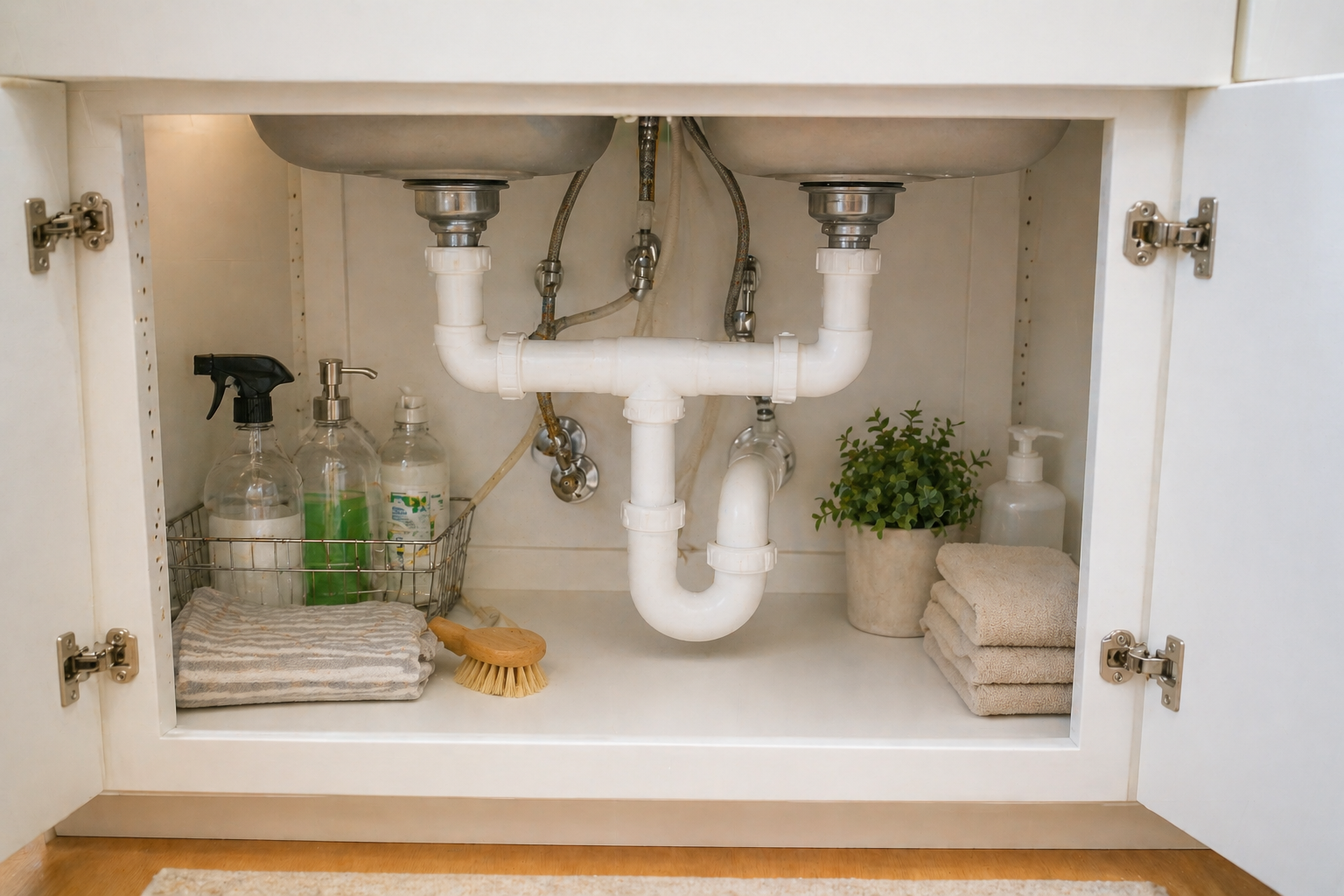
The most common cause of kitchen sink odors is organic buildup — food particles, grease, and soap scum collecting inside the drain pipe and the P-trap (the curved pipe under your sink). In Florida's warm climate, this buildup decomposes faster than in cooler states, which intensifies the smell. Pouring boiling water down the drain followed by a baking soda and vinegar flush can help. For persistent buildup, a drain brush or enzyme-based drain cleaner works better than chemical bleach products.
The P-trap holds a small amount of water that acts as a barrier against sewer gases. If your sink hasn't been used for a while — common in Florida vacation or snowbird homes — that water can evaporate and let sewer odors rise through the drain. Running the water for a minute usually refills it. If the smell returns quickly after normal use, the P-trap may be damaged or improperly sealed and needs replacement.
Pro Tip: If your sink sits unused for a week or more (during travel or snowbird season), pour a cup of mineral oil down the drain before you leave. It sits on top of the water and slows evaporation.
If you have a garbage disposal, it's often the actual source of the smell — not the drain itself. Food particles get trapped under the rubber splash guard and in the grinding chamber. Cleaning the splash guard (lift and scrub underneath it), grinding ice cubes, and running citrus peels through the disposal are all effective. Monthly maintenance makes a real difference.
Florida's humidity creates ideal conditions for mold growth. If the smell has a musty, earthy quality rather than a sewage smell, check inside the cabinet under your sink. A slow drip from the drain connection or a failing seal around the sink rim can create constant moisture that breeds mold. Wipe everything dry, fix the leak source, and use a mold-inhibiting spray. If the smell persists, the issue may be inside the wall pipe — which needs a plumber.
Sometimes the smell is coming from deep scratches or cracks in the basin where bacteria collect and are impossible to fully clean. Old porcelain and certain composite sinks can develop porous areas over time that trap odors. If you've tried everything and the smell persists, the sink surface itself may have deteriorated past the point of recovery.
Your kitchen should smell like whatever you're cooking — not like whatever's living in your drain. Most odor problems are fixable, and we're happy to help you figure out whether the fix is a cleaning routine or a fresh start.
Let's Fix That Smell for GoodContact I Hate My Sink at 1(866) 790-6929 or visit ihatemysink.com to schedule your free in-home consultation. We'll assess your sink, your drain, and your options — no pressure, no deposit.

.svg)
.svg)

.png)
