.svg)
%204.svg)
Over 3,500 sinks installed
Contact Us
Thank you! Your submission has been received!
Oops! Something went wrong while submitting the form.
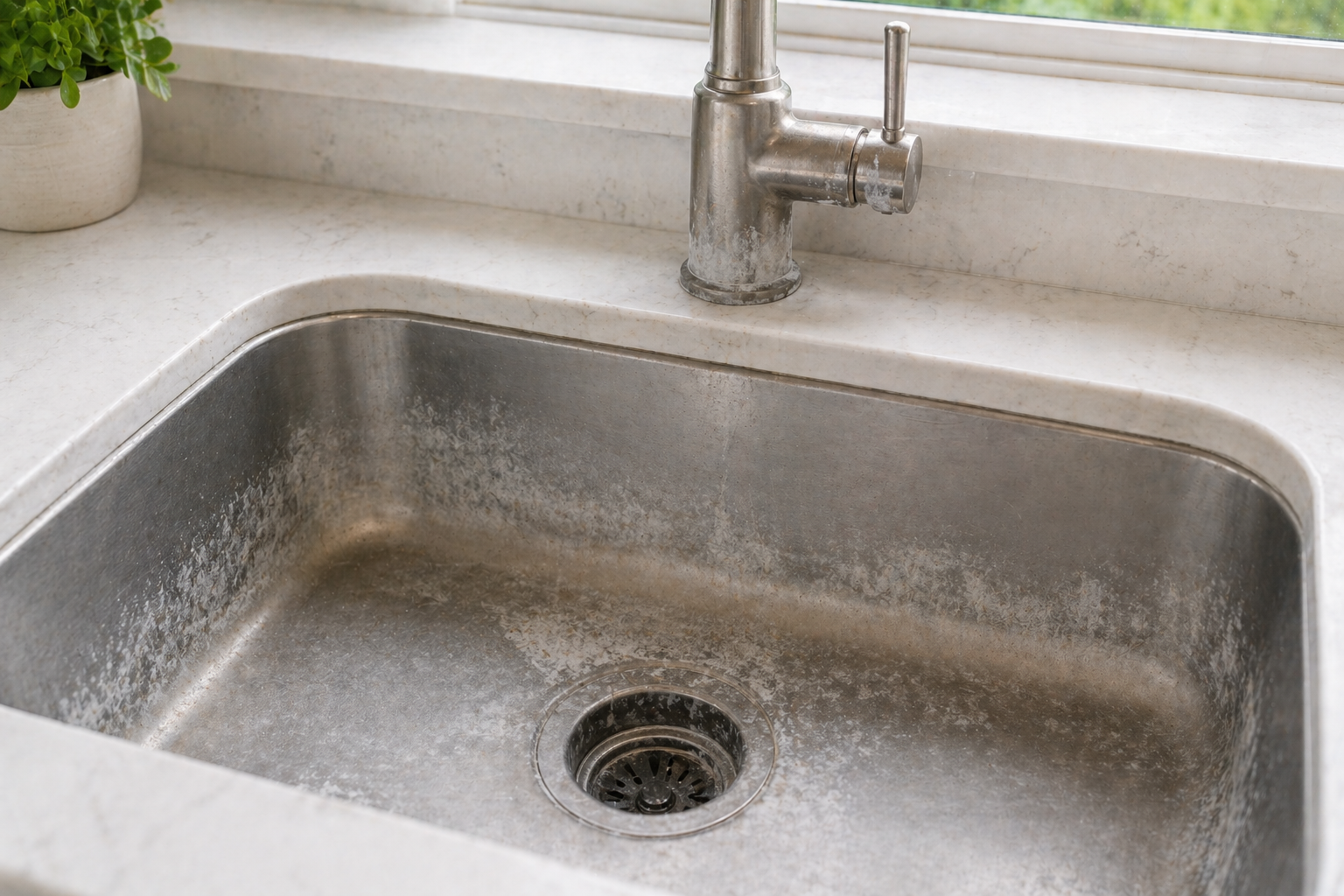
If you live in Florida, you know hard water. That white, chalky buildup around your faucet, drain, and basin edges isn't dirt — it's dissolved minerals left behind every time water evaporates off your sink surface. It looks bad, it spreads fast, and most cleaning products barely make a dent. Here's what actually works.
Florida's groundwater pulls through limestone — one of the most mineral-rich rock formations in North America. That means calcium, magnesium, and iron end up in your tap water at some of the highest concentrations in the country. Every glass of water you rinse away, every pot you fill — it all leaves a residue. Over months and years, that residue builds into hard, crystallized deposits that bond to your sink surface.
Acid is what dissolves mineral deposits — and most household cleaners aren't acidic enough to do the job. White vinegar (undiluted) applied and left to sit for 20–30 minutes can dissolve mild buildup. For heavier deposits, a citric acid powder dissolved in warm water works better. CLR (Calcium, Lime, and Rust remover) is among the most effective commercial options — apply, let it dwell, then scrub gently and rinse thoroughly. Always check that the product is safe for your sink material before using.
Pro Tip: After removing the buildup, apply a thin coat of car wax or mineral oil to your sink surface. It creates a barrier that makes water bead up rather than sit and evaporate — slowing future deposit formation significantly.
Abrasive scrubbing pads used on stainless steel or porcelain can scratch the surface and create more places for minerals to grip. Bleach and most multi-surface sprays don't dissolve calcium — they just move it around. Dish soap alone won't touch established deposits. And steel wool, no matter how tempting, damages the surface permanently.
If hard water deposits have bonded so deeply that no cleaner removes them, or if the underlying surface is pitted, discolored, or etched from years of exposure, cleaning is no longer the solution. The protective coating of the sink has failed, and new deposits will bond even faster to the damaged surface. At that point, replacement gives you a clean surface with current materials that resist staining better than older sinks.
Hard water is a fact of life in Florida. A good cleaning routine helps — but the right sink material makes all the difference in how much work you have to do to keep it looking great.
Tired of Fighting the Same Stains?Call I Hate My Sink at 1(866) 790-6929 or visit ihatemysink.com for a free consultation. We'll recommend the right material for your water, your lifestyle, and your kitchen style.

.svg)
.svg)

.png)
