.svg)
%204.svg)
Over 3,500 sinks installed
Contact Us
Thank you! Your submission has been received!
Oops! Something went wrong while submitting the form.
Not all kitchen sinks are created equal — and nowhere is that more true than in Florida. The combination of high humidity, hard mineral-rich water, and year-round heavy use creates conditions that separate a good sink from a great one. Here's what Florida homeowners should look for — and which materials consistently perform best.
Florida groundwater passes through limestone, loading it with calcium, magnesium, and sometimes iron. High ambient humidity means moisture stays on surfaces longer, accelerating mineral deposit formation and corrosion. And because Florida kitchens are used heavily year-round — no "slow season" for cooking — sinks take more wear than in seasonal residences elsewhere. The right sink material minimizes the maintenance burden these conditions create.
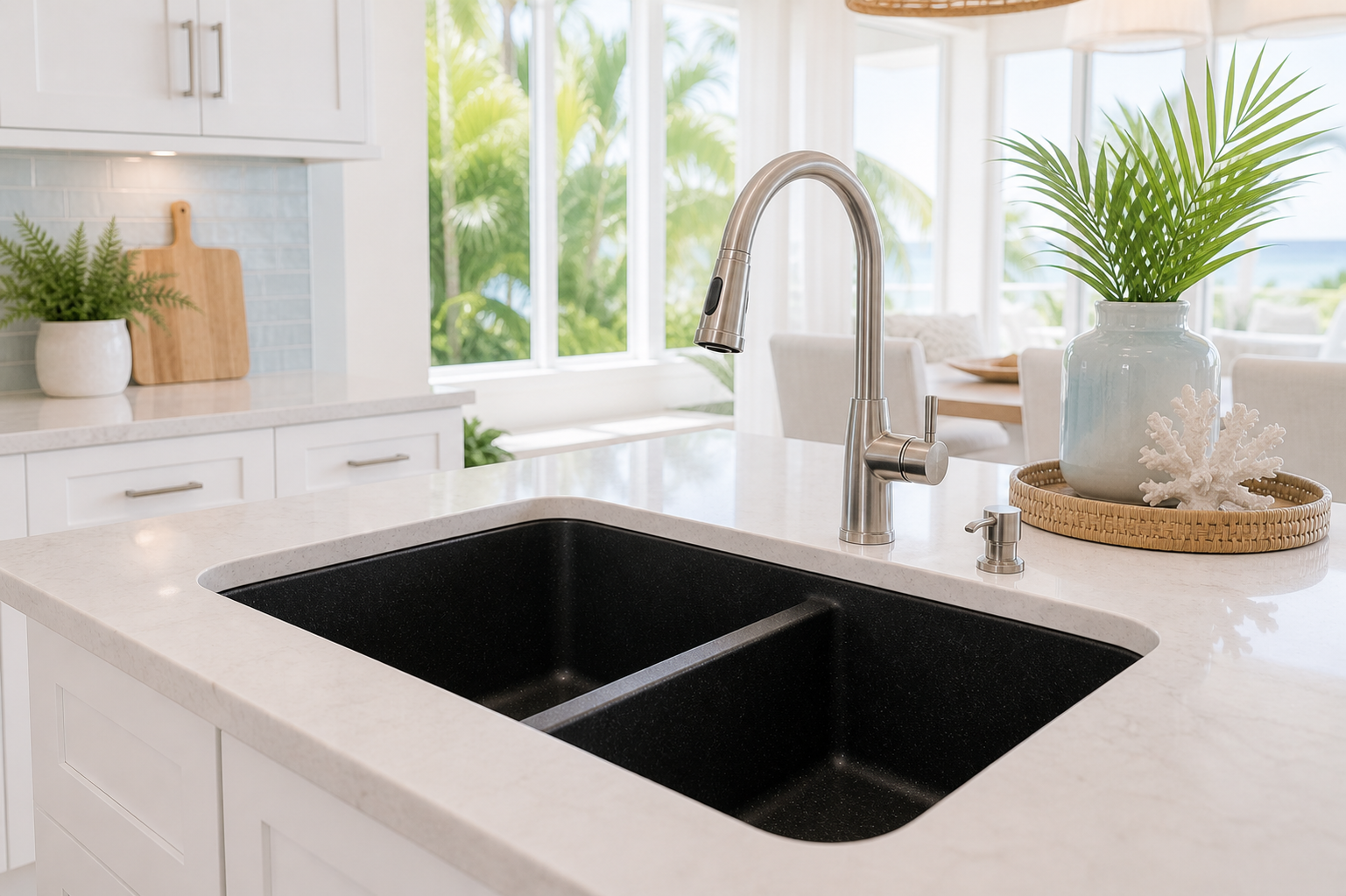
Granite composite sinks (stone mixed with acrylic resin) are arguably the best all-around choice for Florida homes. They resist hard water staining significantly better than stainless steel. They're heat-resistant (important for Florida's endless outdoor cooking culture), scratch-resistant, and non-porous. Dark colors — charcoal, espresso, black — hide mineral deposits between cleanings. With proper care, a granite composite sink can easily last 25+ years in a Florida home.
Fireclay sinks — most often seen in the classic farmhouse/apron-front style — are formed from molded clay fired at extremely high temperatures. The resulting surface is incredibly dense, non-porous, and resistant to both staining and hard water buildup. Florida's coastal kitchen aesthetic pairs beautifully with white or almond fireclay. The tradeoff: they're heavy (installation requires proper cabinet support) and more expensive than composite.
Quality stainless steel (16-gauge or lower number = thicker) is still an excellent choice — it's hygienic, modern, and widely available. But in Florida, it requires more active maintenance than granite composite or fireclay. Without regular drying and occasional polishing, it will develop water spots, lose its shine, and eventually rust around vulnerable areas. Choose 16-gauge or thicker, and pair it with a soft water treatment if possible.
Pro Tip: Whatever material you choose, a well-sealed, properly installed sink matters as much as the material itself. Improper sealing in Florida's humidity leads to moisture infiltration in the cabinet below — one of the most common hidden problems we find.
The best sink for your Florida home is the one that fits your maintenance style, your kitchen design, and your local water conditions. We're happy to guide you to the right choice.
Let's Find Your Florida-Proof SinkCall I Hate My Sink at 1(866) 790-6929 or visit ihatemysink.com for a free consultation. We'll recommend the best material for your specific home.

.svg)
.svg)

.png)
